It starts with one generous friend. A two-ounce bottle of something you'd never buy blind, handed over after a tasting with a “you have to try this.” Then a swap, a club meeting, a bottle share, and a box arrives in the mail. A year later there's a shoebox of little bottles in the cabinet, half of them labeled in ballpoint that has since smeared, and at least one labeled only “the good one.”
Samples are one of the best things about whiskey. They're how you try a bottle before you hunt it and how a group splits something none of you would open alone. They're also very easy to lose track of. Here's a simple system: label it, store it, log it before it's gone, and swap like someone people want to swap with. There's a free printable label sheet near the bottom.
Why samples pile up
Every way samples arrive is a good one. Swaps with people you met online, splits from a club bottle, the leftovers from a tasting night, a friend who opens something special and pours you a dram to take home. None of those comes with a plan for keeping track.
And samples don't behave like bottles. A full bottle sits on the shelf with its label and gets opened a dozen times. A sample is one or two pours, often with no label at all, and it's gone the first time you drink it. If it isn't labeled and noted, all that's left is an empty vial and a vague memory of liking it.
Label it or lose it
A minimum viable sample label has three things on it:
- Whiskey: the full name, including the details that tell bottles apart — batch, barrel number, store pick, age. “Four Roses” isn't enough when there are a dozen Four Roses.
- Proof: it changes how you'll want to taste it, and it's the first thing you forget.
- Date: when it was poured. Samples don't keep forever, and the date tells you which ones to drink first.
Write it the moment the sample is poured, not later. Use a pen that survives a damp hand — a fine-point permanent marker is ideal. If the sample came from someone else, add their name; it's useful when you want to say thanks or ask where they found the bottle.
Free printable: Whiskey Sample Labels (PDF) Avery 5160-compatible — 30 labels per sheet with Whiskey / Proof / Date fields sized for 2oz sample bottles.Print on standard 5160 address labels (or plain paper and tape, in a pinch). No signup and no logo on the labels, just the fields. Print a sheet before your next bottle share and bring a pen.
Storage
A sample has a lot of air for the amount of whiskey in it, and a cap that wasn't made to seal for years. A few habits make them keep:
- Cool, dark, and upright. Same rules as a full bottle. Heat and light speed up change, and upright keeps high-proof spirit off the cap liner.
- Parafilm the keepers. A few wraps of parafilm around the cap slows evaporation a lot. Worth it for anything you're saving, overkill for a sample you'll drink this month.
- Drink the low fills first. A half-full sample has twice the air of a full one. Low fills and older dates go to the front of the line.
- One home for all of them. A single box or drawer beats samples scattered across three cabinets. You can't drink what you can't find.
Log it before it's gone
A full bottle gives you a dozen chances to write a note. A sample gives you one. Write the note the night you pour it, while the glass is still in front of you. Nose, palate, finish, and a line about the setting will do (our tasting notes guide walks through all of it).
Whiskey Thief gives samples their own tab next to My Shelf and the Wishlist. Each sample is marked tasted or untasted, so the untasted pile shows you what's waiting, and you can record a sample serial number if your swap group uses them. Samples get the same tasting notes and flavor wheel as full bottles, and all of it is part of the free core journal.
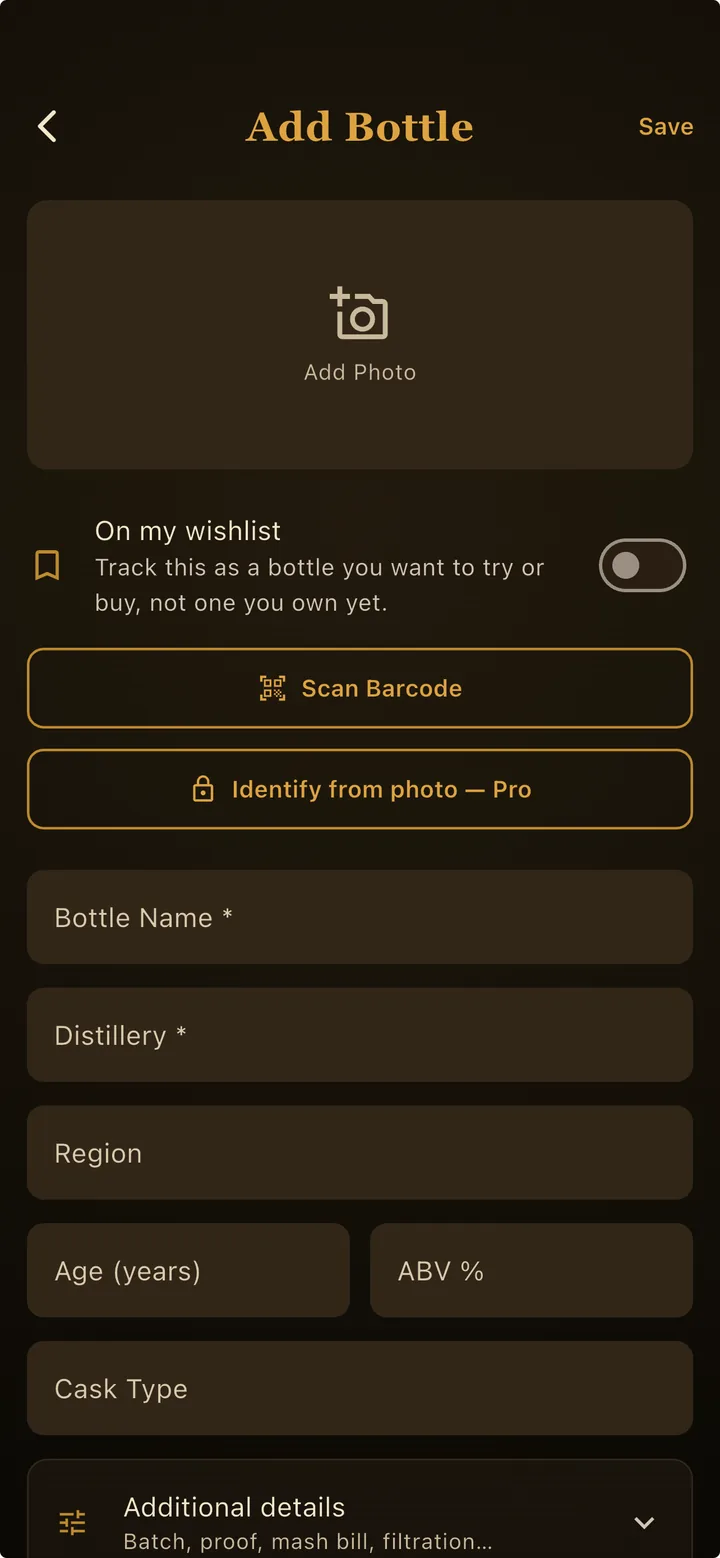
Getting a sample in can be quicker than typing. Identify from photo, a Pro feature with your first scan free, works on sample bottles too. It helps read handwritten labels and pull in what it can. Handwriting varies a lot (that smeared ballpoint won't always cooperate), so check what it found and fill in the rest. Clear writing on a printed label helps.
Swap etiquette
Swapping runs on trust. A few habits make you someone people want to trade with:
- Fill honestly. If you agreed to two ounces, send two ounces, of the bottle you said, from the top half of the bottle if you can.
- Label everything. An unlabeled sample is a puzzle, not a gift. This is what the label sheet is for.
- Pack like it's fragile, because it is. Seal the caps, wrap each bottle, and cushion the box. Shipping spirits is restricted by carriers and by law in many places, so check your local rules and the carrier's policy before anything goes in the mail.
- Reciprocate in kind. Send back something of similar interest. Nobody expects a perfect match, but an effort counts.
- Report back. Tell the sender what you thought. It's the cheapest thanks there is, and the best part of a swap.
Share the pour, keep the notes
That's the whole idea. Pass the bottle around, split the rare one, fill a few vials for friends. The whiskey is for sharing. Your notes are yours. That's why we built Whiskey Thief as the private whiskey journal with an AI palate — your collection never leaves your phone. There's no account and no feed. If you want to show a friend what you thought, export a bottle card image and send it however you like.
Print the labels, wrap the caps, and write the note the night you pour. The shoebox gets a lot less mysterious. See what's in Pro.